

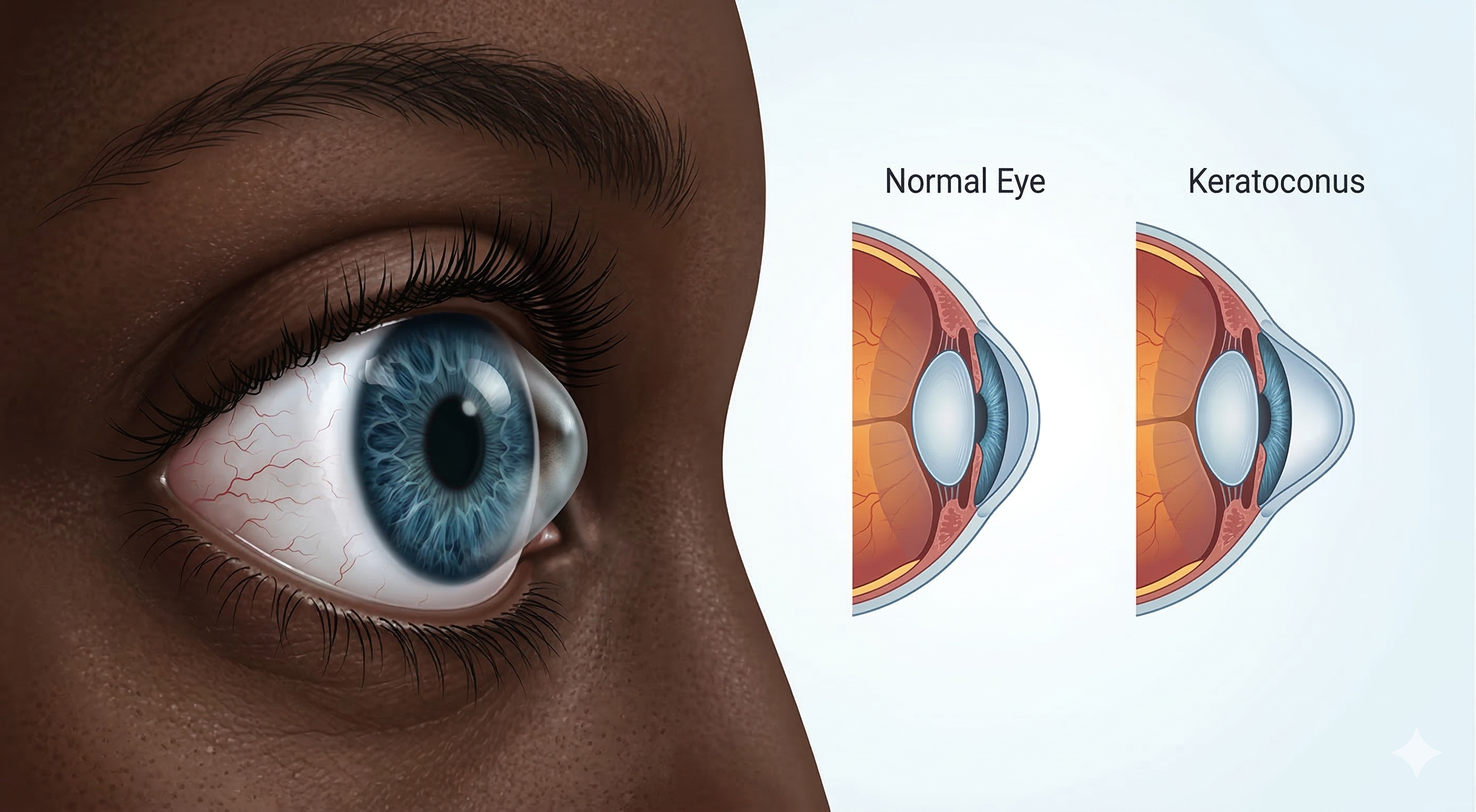
Keratoconus is a progressive eye condition that affects the shape of the cornea—the clear, dome-shaped surface at the front of the eye. Instead of maintaining a smooth, round curvature, the cornea gradually becomes thinner and bulges outward into a cone shape, leading to distorted vision.
Understanding this condition and seeking timely treatment can help preserve your eyesight and prevent complications.
What Causes Keratoconus?
The exact cause is not always known, but several factors may contribute:
- Genetic predisposition
- Excessive eye rubbing
- Chronic allergies
- Connective tissue disorders
- Long-term UV exposure
Keratoconus often begins during the teenage years or early adulthood and may progress over time if left untreated.
Common Symptoms
In its early stages, keratoconus can be difficult to detect. However, warning signs include:
- Blurred or distorted vision
- Increased sensitivity to light
- Frequent changes in eyeglass prescription
- Difficulty seeing at night
- Halos around lights
If you notice these symptoms, an eye evaluation is essential.
How is Keratoconus Diagnosed?
Modern diagnostic tools such as corneal topography allow specialists to map the surface of the cornea with extreme precision. Early detection is crucial because treatment is most effective before the condition advances.
Treatment Options for Keratoconus
Treatment depends on the severity and progression of the condition.
1. Eyeglasses or Soft Contact Lenses
In very early stages, vision can often be corrected with glasses or standard lenses.
2. Rigid Gas Permeable (RGP) Lenses
These specialized lenses create a smooth optical surface, significantly improving vision for many patients.
3. Corneal Collagen Cross-Linking (CXL)
This minimally invasive procedure strengthens corneal tissue using riboflavin drops and ultraviolet light. Cross-linking is highly effective in slowing or stopping disease progression and is considered a breakthrough in keratoconus management.
4. Intacs (Corneal Implants)
Tiny arc-shaped inserts are placed within the cornea to improve its shape and reduce visual distortion.
5. Corneal Transplant
In advanced cases where scarring or extreme thinning occurs, a transplant may be recommended to restore vision.
Why Early Treatment Matters
Ignoring keratoconus can lead to severe visual impairment. Early intervention often prevents the need for major surgery and preserves functional vision.
Regular monitoring allows your ophthalmologist to track progression and recommend timely treatment.
Living with Keratoconus
With modern advancements, most people with keratoconus lead normal, active lives. Protect your eyes by:
- Avoiding eye rubbing
- Managing allergies
- Wearing UV-protective sunglasses
- Attending scheduled eye exams
Expert Care Makes the Difference
Managing keratoconus requires specialized expertise and advanced technology. At Infinite Vision Care Eye Clinic, patients benefit from detailed corneal assessments, customized treatment plans, and access to modern procedures designed to stabilize and improve vision.
Take the First Step Toward Clearer Vision
If you are experiencing unexplained vision changes or have been diagnosed with keratoconus, do not delay treatment. Early care can dramatically improve outcomes and protect your long-term eyesight.
Your vision deserves expert attention—because seeing clearly means living fully.
