

Mumbai’s skyline is iconic, but along with it comes rising air pollution, vehicle emissions, construction dust, and coastal humidity. For many residents, especially those working outdoors or commuting daily, these environmental factors are triggering a growing eye health issue: Dry Eye Syndrome. If you frequently experience burning eyes, irritation, redness, or blurred vision, Mumbai’s air quality may be affecting your eye health more than you realize.
How Air Pollution Affects Your Eyes
The surface of your eyes is protected by a thin tear film made of water, oils, and mucus. This film keeps the eyes lubricated and clear.
However, pollutants such as PM2.5 particles, vehicle exhaust fumes, Industrial smoke, and Construction dust can disrupt this tear film. When this happens, tears evaporate quickly, leaving the eyes dry, irritated, and inflamed. In a city like Mumbai, where daily commuting and long screen hours combine with pollution exposure, dry eye cases are increasing significantly.
Common Symptoms of Dry Eyes
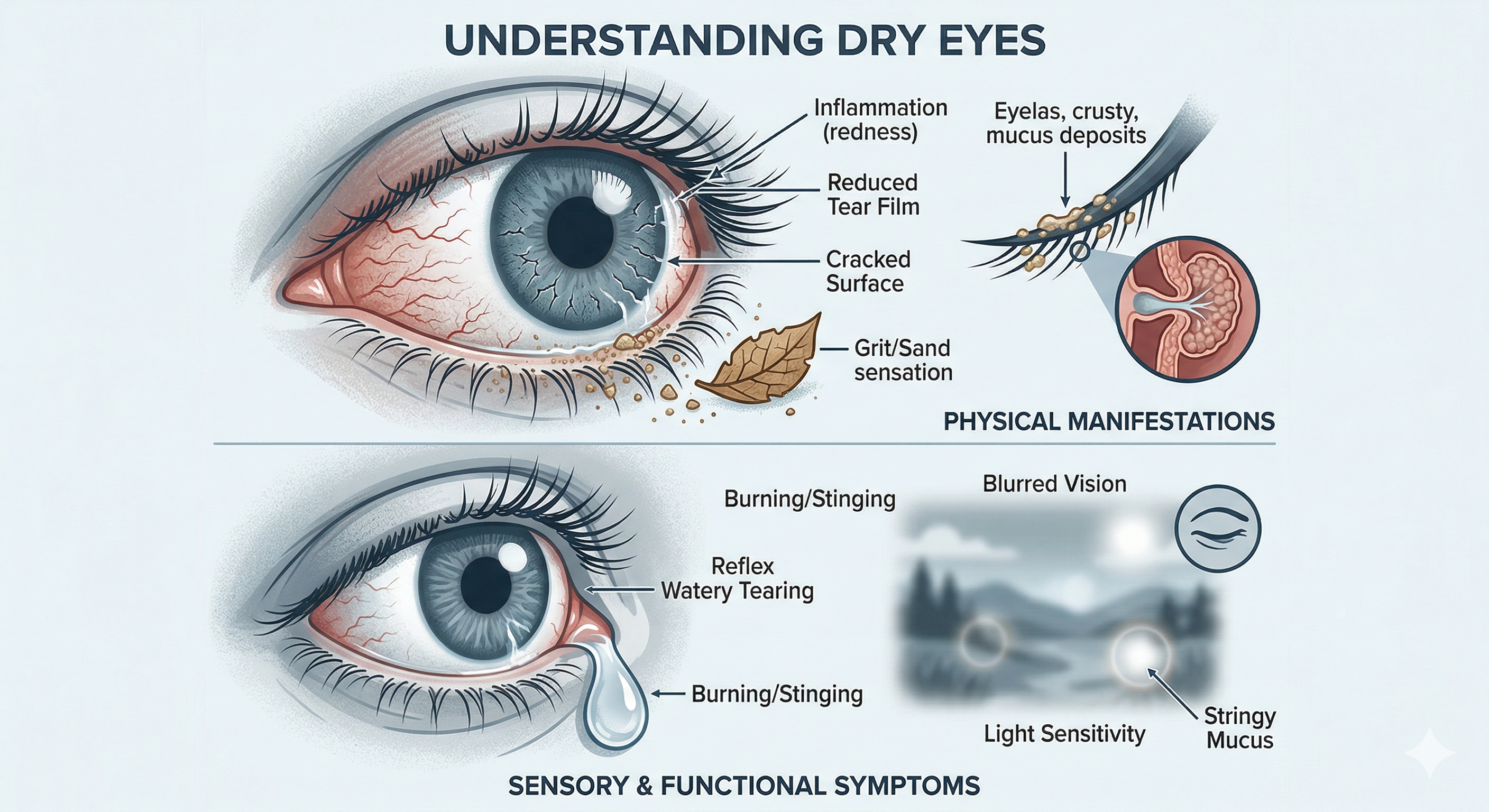
You may be experiencing pollution-related dry eyes if you notice:
- Burning or stinging sensation
- Redness and irritation
- Excessive tearing
- Blurred or fluctuating vision
- Sensitivity to light
- A gritty or sandy feeling in the eyes
Ironically, watery eyes can also signal dryness, as the eyes produce reflex tears in response to irritation.
Who Is Most at Risk in Mumbai?
Certain groups are more vulnerable to dry eye symptoms – Daily commuters on bikes or in open vehicles, people working long hours on computers, contact lens users, individuals over 40, people living near construction zones or high-traffic roads and Tech professionals in areas like Powai, Andheri, BKC, and Navi Mumbai often experience a combination of screen strain and environmental dryness.
5 Ways to Protect Your Eyes from Pollution
1. Wear Protective Eyewear Outdoors
Wraparound sunglasses can act as a barrier against dust, pollutants, and wind. Choose glasses with UV protection and wider frames to reduce direct exposure to airborne particles.
2. Use Preservative-Free Artificial Tears
Lubricating eye drops help restore moisture to the eye surface and stabilize the tear film. They are especially useful if you spend long hours in air-conditioned offices or travel through heavy traffic zones.
3. Follow the 20-20-20 Rule
Screen exposure worsens dry eye symptoms. Every 20 minutes. Look at something 20 feet away For 20 seconds. This helps reduce strain and encourages natural blinking.
4. Improve Indoor Air Quality
Air conditioning can worsen dryness. Consider using a humidifier. Keeping plants indoors. Avoiding direct AC airflow toward your face. These steps help maintain eye moisture.
5. Schedule Regular Eye Check-ups
Persistent dryness may require medical treatment or prescription eye drops.
An ophthalmologist can evaluate your tear production and recommend treatments such as lubricating gels, anti-inflammatory drops, tear duct plugs in severe cases
Consult an eye doctor if dryness lasts more than 1–2 weeks, vision becomes blurry, or you experience severe redness or pain
Early diagnosis can prevent chronic dry eye disease and protect long-term vision.
Living in a vibrant city like Mumbai often means exposure to pollution, long commutes, and digital work environments—all of which can impact eye health.
Fortunately, simple habits like protective eyewear, proper screen breaks, and regular eye check-ups can make a significant difference.
If dry eye symptoms persist, consulting an experienced Mumbai ophthalmologist ensures proper diagnosis and treatment before the condition worsens.
