

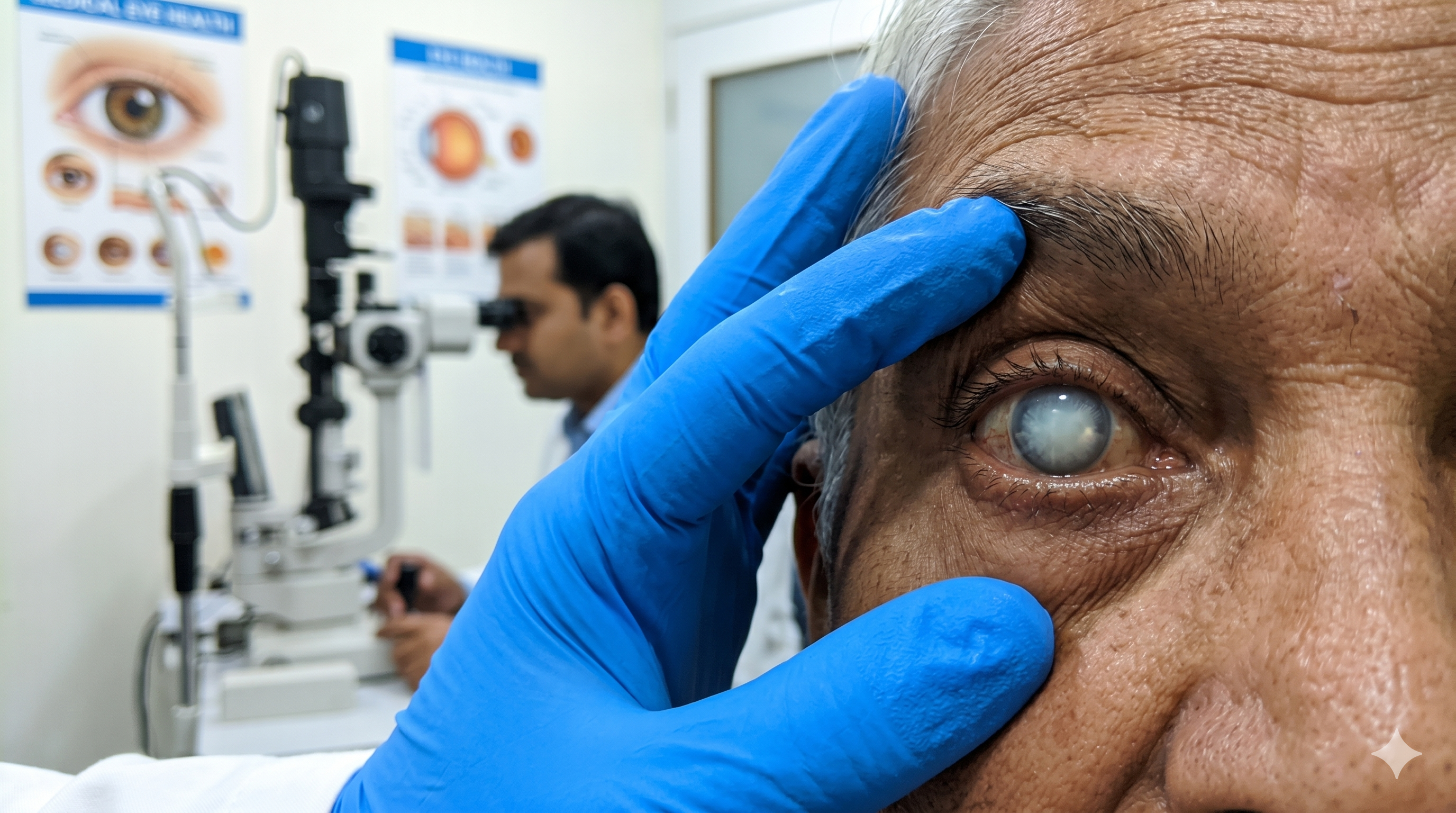
Living in Mumbai means your eyes are constantly working overtime. Whether you’re navigating the glare of high-beams on the Sea Link, staring at screens in a BKC office, or squinting against the harsh afternoon sun at Marine Drive, we demand a lot from our vision.
Often, we dismiss “fuzzy” vision as just tiredness or an old pair of glasses. But in a city that never stops, your vision shouldn’t either. Cataracts—once thought of as only an “old age” problem—are increasingly affecting Mumbaikars in their 40s and 50s.
What Exactly is a Cataract?
Think of your eye like a camera. To take a clear picture, the lens must be transparent. A cataract is like a fog or “cloud” developing on that lens. As it thickens, light can’t pass through properly, leaving you with a world that looks increasingly blurred, dim, or distorted.
Top 7 Signs You Need a Check-up
Cataracts are “slow burners.” They don’t happen overnight, which is why it’s easy to ignore these seven warning signs:
- The “Foggy Window” Effect: Your vision feels constantly blurry or hazy, as if you’re looking through a dusty windshield.
- Night Driving Struggles: If the headlights on the Western Express Highway are starting to look like terrifying explosions of light, your night vision is likely compromised.
- The Squint Factor: You find yourself unusually sensitive to bright sunlight or office tubelights.
- Halo Vision: Seeing glowing rings or “halos” around streetlights or car lamps is a classic red flag.
- The “New Glasses” Loop: You just got new spectacles, but six months later, they already feel “off.” Frequent prescription changes often signal a changing lens, not just a refractive error.
- Faded Colors: The vibrant colors of a Mumbai flower market suddenly look dull. Whites may look yellowish, and blues and purples become hard to tell apart.
- Ghost Images: Experiencing double vision in just one eye (even when the other is closed) is a sign that light is being scattered unevenly by a cloudy lens.
The Mumbai Factor: Who is at Risk?
While age is the biggest factor, our urban lifestyle adds a few more:
- UV Exposure: Those long commutes in the Mumbai sun without UV-protected sunglasses.
- Health Conditions: Diabetes (highly prevalent in urban India) significantly fast-tracks cataract growth.
- Lifestyle: Smoking and long-term use of certain medications (like steroids) can increase risk.
Navigating the Clinic: What to Expect and When is it Time for Surgery?
Visiting an eye clinic in Mumbai for the first time? Don’t worry—the process is painless and tech-driven. Here is what happens:
Years ago, doctors told patients to wait until a cataract was “ripe” (completely hard). That is no longer the case.
Modern ophthalmology suggests surgery as soon as the cataract starts interfering with your life. If you’re struggling to read the newspaper, drive at night, or recognize faces across the street, it’s time.
The Good News: The Procedure is a Breeze
Today’s cataract surgery (Phacoemulsification) is one of the safest and most successful procedures in the world:
- Time: Usually takes just 15–20 minutes.
- No Stays: You walk in and walk out the same day.
- Recovery: Most patients see a dramatic improvement in clarity within 24 to 48 hours.
In a city as vibrant as Mumbai, you don’t want to miss a single detail. Cataracts are a natural part of aging for many, but they don’t have to be a sentence to poor vision.
If you’re over 40 and noticing any of the signs above, book a comprehensive eye check-up. Your future self (and your eyes) will thank you!
